
Modern Biomarkers Redefine Pancreatic Cancer Staging
Understanding Its Importance and Impact on Treatment and Prognosis
Pancreatic cancer is a complex and aggressive form of cancer that originates in the pancreas, an essential organ responsible for producing digestive enzymes and hormones such as insulin. Due to its often late detection and rapid progression, understanding pancreatic cancer staging is crucial for patients, their families, and cancer specialists.

Cancer Staging Refers to the Process of Determining the extent of Cancer Growth and Spread within the body, which plays a vital role in guiding treatment decisions and predicting patient outcomes.
This article delves into the intricacies of Pancreatic Cancer staging, its importance, and how it influences the available treatment options and survival rates. Furthermore, we will discuss the implications of Pancreatic Cancer Staging for patients and their families and explore future research directions in this critical area of oncology.
Pancreatic Cancer
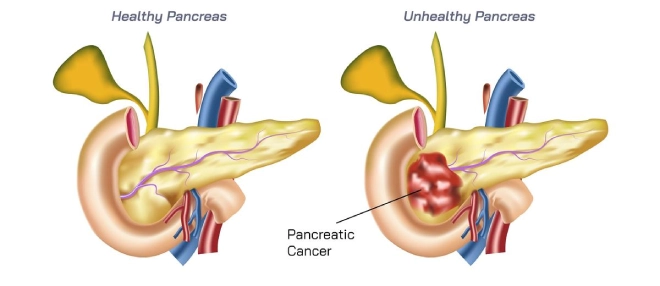
Pancreatic Cancer Begins in the Pancreas, a vital organ located in the abdomen, behind the stomach. The pancreas has two primary functions: producing digestive enzymes that help break down food and releasing hormones such as insulin and Glucagon to Regulate Blood Sugar Levels.
The Emotional journey of recognizing Symptoms of Pancreas Cancer can be Distressing, Leaving you in search of expert guidance and understanding. Dr. Aditya Kulkarni,a Reputable Pancreas Cancer Treatment in Pune, is Provide caring hand, offering Specific care and a sense of comfort during your treatment process.
Cancer Staging
Cancer staging is a standardized system used by Oncologist i.e. expert doctors in cancer treatment to determine the extent of cancer growth and spread within the body. The purpose of cancer staging is to provide a common language for describing the severity of the disease, guide treatment decisions, and predict patient outcomes.
Staging takes into account the tumor size, the involvement of nearby lymph nodes, and the presence of metastasis (spread) to distant organs. Different systems can be used for staging various types of cancer, but one widely used method is the TNM (Tumor, Node, Metastasis) system. Understanding the stage of cancer helps doctors tailor treatment plans to the specific needs of each patient and provides valuable information on the likely course of the disease and survival chances.
Cancer Staging in Pancreatic Cancer
Pancreatic cancer is primarily staged using the TNM (Tumor, Node, Metastasis) system developed by the American Joint Committee on Cancer (AJCC). This system takes into account the size and extent of the primary tumor (T), the involvement of nearby lymph nodes (N), and the presence of distant metastasis (M). Based on the TNM criteria, doctors assign a stage from 0 to IV, with higher stages indicating more advanced cancer.
What are the Different Stages of Pancreatic Cancer?
Stage 0 (Carcinoma in situ): At this stage, abnormal cells are present only within the lining of the pancreas, and they have not invaded deeper tissues or spread beyond the pancreas.
Stage I: Stage I pancreatic cancer is divided into two sub-stages:
Stage IA: The tumor is confined to the pancreas and is 2 centimeters or smaller in size.
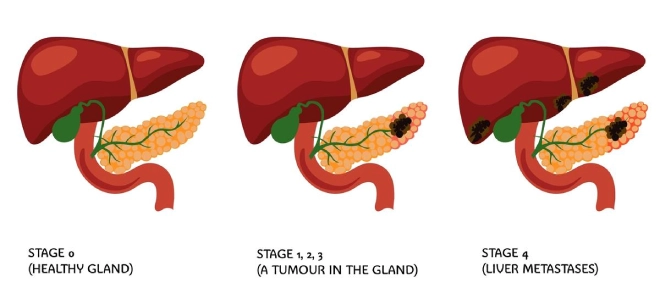
Stage IB: The tumor is still within the pancreas but is larger than 2 centimeters.
Stage II: Stage II pancreatic cancer is also divided into two sub-stages:
Stage IIA: The tumor has grown beyond the pancreas but has not involved nearby lymph nodes.
Stage IIB: The tumor has spread to nearby lymph nodes but has not metastasized to distant organs.
- Stage III: At this stage, the cancer has spread to major blood vessels near the pancreas and may involve nearby lymph nodes, but it has not yet metastasized to distant organs.
Stage IV: Stage IV pancreatic cancer is the most advanced stage, where the cancer has metastasized to distant organs, such as the liver, lungs, or peritoneum.
Identifying the stage of pancreatic cancer helps doctors determine the most appropriate treatment options and predict patient outcomes, allowing for more personalized and effective care.
Implications of Pancreatic Cancer Staging for Patients and their Families:
Pancreatic cancer staging has several implications that directly impact patients and their families:
- Prognosis: Understanding the stage of pancreatic cancer allows doctors to provide patients and their families with more accurate information regarding their prognosis, including survival rates and the potential effectiveness of specific treatments.
- Emotional and psychological support: Knowing the stage of pancreatic cancer can help patients and their families come to terms with the diagnosis, prepare for the treatment journey ahead, and seek appropriate emotional and psychological support, such as counseling or support groups.
- Resource planning: Staging can also help patients and their families plan for the financial, practical, and emotional resources needed during treatment and recovery, ensuring they are better equipped to navigate this challenging period.
Future Directions of Research in Pancreatic Cancer staging
- Improved imaging techniques: The development and refinement of imaging technologies, such as MRI, CT scans, and PET scans, can lead to more accurate and non-invasive staging methods, enabling earlier detection and more precise determination of the cancer’s extent.
- Molecular and genetic markers: Identifying molecular and genetic markers associated with pancreatic cancer progression and response to treatment may enable more personalized staging systems and targeted therapies, improving patient outcomes.
- Integration of artificial intelligence (AI) and machine learning: AI and machine learning algorithms have the potential to assist in the analysis of large-scale clinical data, enhancing the accuracy and efficiency of staging and predicting patient outcomes.
- Collaborative research: International collaborations and data sharing among researchers can help advance our understanding of pancreatic cancer staging, leading to more standardized and effective staging systems worldwide.
By pursuing these research directions, the medical community can continue to refine and improve pancreatic cancer staging methods, ultimately leading to better treatment strategies, more accurate prognoses, and improved survival rates for patients.
Take a Moment to Call Someone You Care About
Wrapping up
In conclusion, pancreatic cancer presents a formidable challenge as a complex and aggressive disease originating in the pancreas, a crucial organ governing digestive enzymes and hormones.Given its tendency for late detection and rapid advancement, grasping the intricacies of pancreatic cancer staging becomes imperative for patients, families, and oncologists alike. Cancer staging, the process of assessing cancer’s extent and spread, holds profound significance in shaping treatment approaches and forecasting patient prognosis.
Delving into the implications of pancreatic cancer staging for patients and their families, and exploring future research avenues, becomes vital in the pursuit of progress and improved outcomes in this critical realm of oncology.

Dr. Aditya Kulkarni
MS, DNB, FRCS, MCh (Surgical Gastroenterology & GI Oncology)
Dr. Aditya Kulkarni is a Consultant of Laparoscopic and Robotic Gastrointestinal, Hepato-biliary-pancreatic, and Cancer Surgeon at the Renowned Oasis Surgery Clinic Pune.
Book An Appointment