
Can Gallbladder Cancer Cause Jaundice?
Gallbladder cancer is a serious and often misunderstood condition, particularly in India, where it is more common compared to Western countries.
Among the various concerns that patients and their families have, one pressing question often arises: Can gallbladder cancer cause jaundice?
Gallbladder cancer can cause jaundice, especially when the tumour grows large enough to block bile ducts.
In this blog we will see how gallbladder cancer can lead to jaundice, the implications of this symptom, and what it means for the stage and treatment of the disease.
What Is Gallbladder Cancer and Why Is It More Common in India?
Gallbladder cancer is a type of cancer that starts in the gallbladder, a small organ located beneath the liver.
The gallbladder’s primary function is to store bile, a digestive fluid produced by the liver. Bile helps digest fats in the small intestine.
When cancer develops in the gallbladder, it often begins in the inner layers and can grow to invade other parts of the body.
In India, particularly in the northern regions, the incidence of gallbladder cancer is notably higher compared to Western countries.
This disparity may be due to a combination of genetic factors, environmental influences, and dietary habits prevalent in these areas.
While the exact cause is still not fully understood, it is clear that gallbladder cancer poses a significant health risk in India.
How Does Gallbladder Cancer Develop?
Gallbladder cancer typically begins in the cells lining the inside of the gallbladder. As the cancer grows, it can spread to other parts of the body, including the liver, small intestine, large intestine, and the bile ducts.
The bile ducts are crucial as they carry bile from the liver and gallbladder to the small intestine. When these ducts become involved in the cancer, it can lead to significant complications, including jaundice.
How Does Gallbladder Cancer Cause Jaundice?
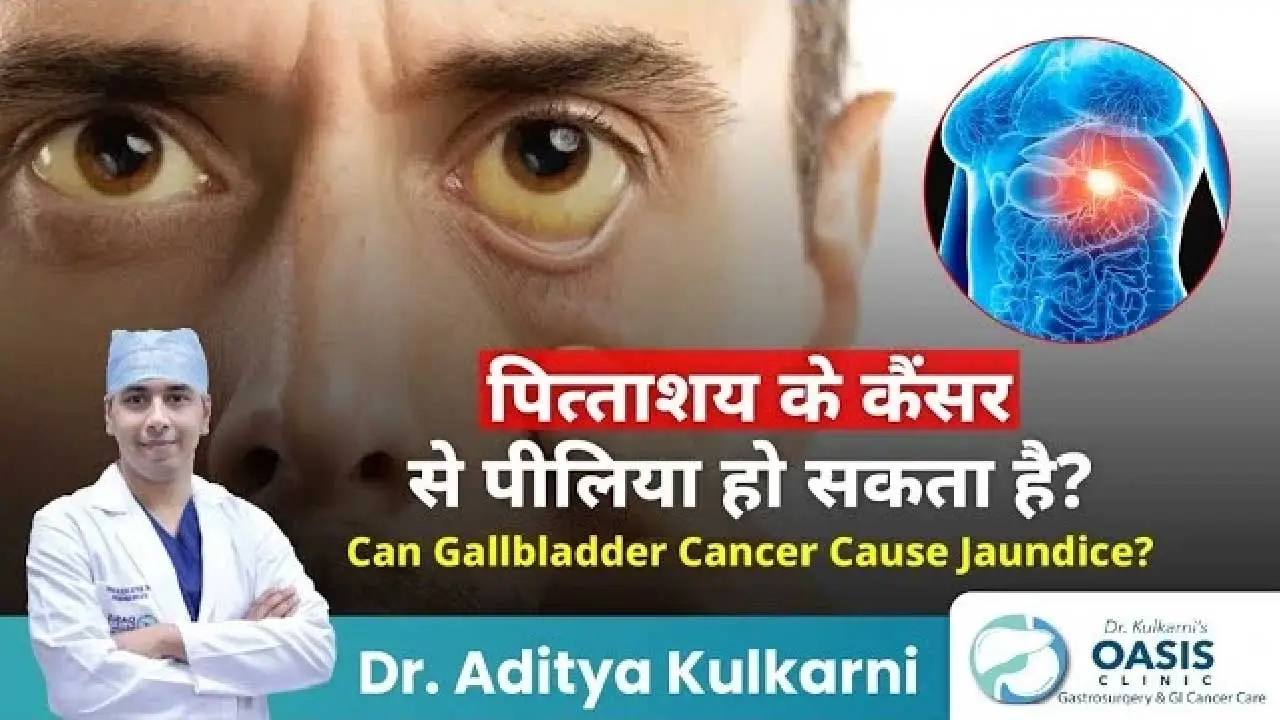
Jaundice is a condition characterized by the yellowing of the skin and eyes, caused by an increase in bilirubin levels in the blood.
Bilirubin is a yellow compound that is produced during the normal breakdown of red blood cells. The liver processes bilirubin, which is then excreted from the body through bile.
In cases of gallbladder cancer, jaundice can occur when the tumor grows large enough to block the bile ducts.
These ducts are responsible for carrying bile from the liver and gallbladder to the small intestine. When the bile ducts are blocked, bile cannot flow properly, leading to a buildup of bilirubin in the blood, which results in jaundice.
This blockage can happen in the later stages of gallbladder cancer when the tumor has grown significantly or has spread to nearby structures.
When a patient with gallbladder cancer develops jaundice, it often indicates that the cancer has reached an advanced stage.
What Does the Presence of Jaundice Indicate About the Stage of Gallbladder Cancer?
The presence of jaundice in a patient with gallbladder cancer usually signals that the cancer is in an advanced stage.
Specifically, jaundice can indicate that the cancer has spread to the bile ducts, causing them to become blocked.
This blockage not only leads to jaundice but also suggests that the cancer may have spread to other nearby organs, such as the liver.
When jaundice is present, doctors often conduct further tests to determine the exact stage of the cancer.
These tests might include imaging studies like CT scans, MRIs, or ultrasounds to visualize the tumor’s size and extent of spread.
Unfortunately, by the time jaundice appears, gallbladder cancer is often diagnosed at stage III or even stage IV, where the options for treatment become more limited and complex.
What Are the Treatment Options for Gallbladder Cancer with Jaundice?
Treatment for gallbladder cancer depends on the stage of the disease, the location of the tumor, and the overall health of the patient.
When jaundice is present, the first step in treatment is often to relieve the bile duct blockage.
This can be done through a procedure called endoscopic retrograde cholangiopancreatography (ERCP).
During ERCP, a small stent is placed in the bile duct to keep it open, allowing bile to flow normally and reducing jaundice.
The stent can be made of metal or plastic and typically lasts for three to six months.
While this procedure provides temporary relief from jaundice, it does not treat the cancer itself.
After addressing the jaundice, doctors will discuss the best course of treatment for the cancer, which may include surgery, chemotherapy, or radiation therapy.
In some cases, surgery might be possible to remove the tumor if the cancer has not spread too far.
However, if the cancer is too advanced, surgery may not be an option, and treatment will focus on managing symptoms and improving the patient’s quality of life.
What Should Patients and Families Do if Jaundice Is Detected?
If jaundice is detected in a patient with gallbladder cancer, it is essential to seek medical attention immediately.
Jaundice indicates that the cancer may be progressing, and prompt intervention is necessary to manage the symptoms and determine the appropriate treatment strategy.
Doctors will likely recommend a series of tests to assess the extent of the cancer and the degree of bile duct blockage.
Based on the results, a treatment plan will be developed that may include stenting, surgery, chemotherapy, or a combination of these approaches.
It’s also important for patients and their families to discuss the prognosis with their healthcare team.
While the presence of jaundice suggests advanced cancer, treatment can still help manage symptoms and improve quality of life.
Open communication with doctors and specialists can help patients and their families make informed decisions about their care.
Don’t wait—schedule a consultation with Dr. Kulkarni (best gallbladder cancer doctor in pune) today to discuss your treatment options and take the first step towards better health.
Your well-being is a priority; reach out now!
Wrapping Up
Gallbladder cancer is a challenging condition, especially when it progresses to the point where it causes jaundice.
The appearance of jaundice in a patient with gallbladder cancer is often a sign that the disease has advanced and that immediate medical attention is needed to manage the symptoms and plan the next steps in treatment.
If you or someone you know is dealing with gallbladder cancer and has concerns about jaundice or other symptoms, it is vital to consult with a healthcare professional.
If you have any doubts on the topic, we are here to assist. Reach out to us and our experts will answer your questions.

Dr. Aditya Kulkarni
MS, DNB, FRCS, MCh (Surgical Gastroenterology & GI Oncology)
Dr. Aditya Kulkarni is a Consultant of Laparoscopic and Robotic Gastrointestinal, Hepato-biliary-pancreatic, and Cancer Surgeon at the Renowned Oasis Surgery Clinic Pune.
Book An Appointment