
Hiatal Hernia Surgery: Does Size Really Matter?
Living with a hiatal hernia can be uncomfortable and confusing. You might be dealing with constant heartburn, chest pain, or difficulty swallowing, and wondering what the next step is.
A common question that surfaces is about the size of the hernia and whether that alone determines the need for surgery. If you’re seeking clarity on this, you’ve come to the right place.
This blog will provide a detailed, expert-guided look into hiatal hernias.
We will break down why surgery is recommended, explore whether the size of the hernia is the most important factor, and discuss the different types of hernias and surgical options.
Our goal is to give you the clear, trustworthy information you need to have an informed conversation with your doctor.
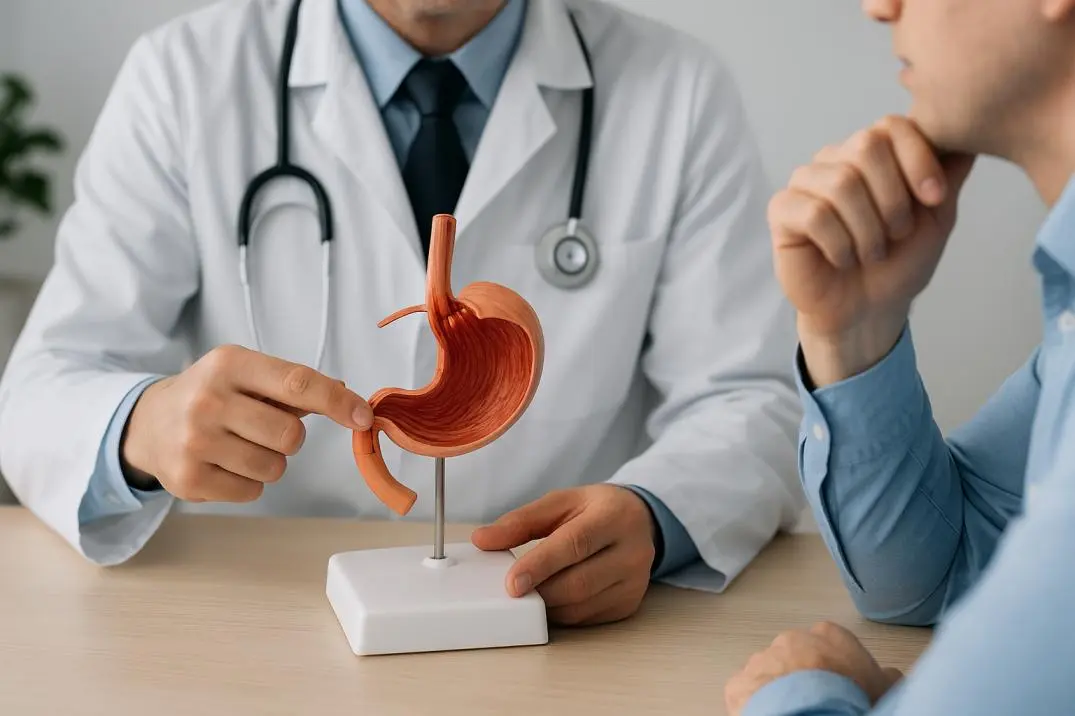
What Is a Hiatal Hernia?
A hiatal hernia occurs when the upper part of your stomach bulges up through the large muscle separating your abdomen and chest (the diaphragm).
Your diaphragm has a small opening called the hiatus, through which your food pipe (oesophagus) passes before connecting to your stomach.
When this opening weakens, the stomach can push through it, leading to a hiatal hernia.
There are primarily two main types of hiatal hernias:
- Type I (Sliding Hiatal Hernia): This is the most common type, accounting for over 95% of cases. The part of the stomach that joins the oesophagus slides up into the chest through the hiatus. These are often small and may not cause any symptoms.
2.Type II, III, and IV (Para-oesophageal Hernias): These are less common but often more serious. A part of the stomach pushes up into the chest alongside the oesophagus. With these types, there’s a higher risk of the stomach becoming “strangulated,” meaning its blood supply gets cut off, which is a medical emergency.
Does the Size of a Hiatal Hernia Determine the Need for Surgery?
No, the size of a hiatal hernia is not the only factor that determines the need for surgery.
While a large hernia is more likely to cause severe symptoms and require surgical intervention, the decision is primarily based on the severity of your symptoms and the type of hernia you have.
A person with a small hernia might experience debilitating acid reflux that doesn’t respond to medication, making them a candidate for surgery. Conversely, someone with a large hernia discovered incidentally during a check-up, who has no symptoms, might be managed with watchful waiting.
In short: Symptoms and complications are more critical than size alone.
When Is Surgery Absolutely Necessary for a Hiatal Hernia?
Surgery is generally recommended when a hiatal hernia leads to significant complications or symptoms that severely impact your quality of life and don’t improve with medication or lifestyle changes.
Key reasons for recommending surgery include:
- Severe Gastro-oesophageal Reflux Disease (GERD): Chronic, intense heartburn, regurgitation, or chest pain that isn’t controlled by medicines like proton pump inhibitors (PPIs).
- Complications of GERD: Damage to the oesophagus, such as oesophagitis (inflammation), ulcers, or a pre-cancerous condition called Barrett’s oesophagus.
- Para-oesophageal Hernia (Types II, III, IV): Due to the high risk of strangulation or obstruction (volvulus), surgery is often advised for these types, even without severe symptoms.
- Acute Complications: Symptoms like sudden, severe chest or abdominal pain, vomiting, or an inability to pass gas or have a bowel movement can indicate a strangulated hernia, which requires emergency surgery.
- Non-Acid Reflux Symptoms: Trouble swallowing (dysphagia), significant bloating, a feeling of food getting stuck in the chest, or respiratory issues like chronic coughing or asthma triggered by reflux.
How Are Hiatal Hernias Measured?
Hiatal hernias are typically measured during diagnostic tests like an endoscopy, a barium swallow X-ray, or a CT scan. The size is often described by the vertical length of the herniated stomach that has moved into the chest, usually measured in centimetres (cm).
Here’s a general classification of hiatal hernia sizes, although it’s not a rigid system:
|
Hernia Size |
Measurement (approx.) |
Common Characteristics |
|
Small |
Less than 3 cm |
Often asymptomatic or causes mild GERD. Rarely requires surgery unless symptoms are severe. |
|
Moderate |
3 cm to 5 cm |
More likely to cause persistent GERD symptoms. Surgery may be considered if medication fails. |
|
Large/Giant |
Greater than 5 cm |
Often associated with severe symptoms, a higher risk of complications, and more likely to be a para-oesophageal type. Surgery is frequently recommended. |
Remember, a “giant” hiatal hernia, where more than one-third of the stomach is in the chest, almost always warrants a surgical consultation due to the high risk of twisting or strangulation.
What Does Hiatal Hernia Surgery Involve?
The primary goal of hiatal hernia surgery is to pull the stomach back into the abdomen and repair the opening in the diaphragm (the hiatus). The procedure is often combined with another surgery called a fundoplication to prevent future acid reflux.
⇒The Surgical Procedure: A Step-by-Step Overview
- Returning the Stomach: The surgeon gently pulls the herniated part of the stomach back into its proper position below the diaphragm.
- Repairing the Hiatus: The opening in the diaphragm is tightened with stitches to prevent the stomach from moving back up. In cases of very large hernias or weak tissue, a biological mesh may be used to reinforce the repair.
- Fundoplication (If Needed): To create a new anti-reflux barrier, the surgeon wraps the upper part of the stomach (the fundus) around the lower end of the oesophagus. This tightens the lower oesophageal sphincter, preventing stomach acid from flowing back up.
Most hiatal hernia surgeries today are performed laparoscopically. This minimally invasive technique involves making several small incisions in the abdomen instead of one large one. The benefits include less pain, a shorter hospital stay, and a faster recovery compared to traditional open surgery.
Summary
Making a decision about surgery can feel overwhelming. Here are the most important points to remember:
- Symptoms Over Size: The need for surgery is primarily driven by the severity of your symptoms and the type of hernia, not just its size.
- Medication First: For sliding hernias (Type I) with GERD, lifestyle changes and medications are the first line of treatment.
- Surgery for Complications: Surgery is recommended for severe, uncontrolled symptoms, complications like Barrett’s oesophagus, or for para-oesophageal hernias due to the risk of strangulation.
- Large Hernias Need a Closer Look: A hernia larger than 5 cm, or a “giant” hernia, requires careful evaluation by a specialist as it has a higher risk of complications.
- Laparoscopy is the Standard: Modern surgery is usually minimally invasive, leading to a quicker and less painful recovery.
Ultimately, the best course of action is a personalised one. A thorough discussion with a gastroenterologist or a general surgeon will help you understand your specific situation and weigh the pros and cons of surgery.

Dr. Aditya Kulkarni
MS, DNB, FRCS, MCh (Surgical Gastroenterology & GI Oncology)
Dr. Aditya Kulkarni is a Consultant of Laparoscopic and Robotic Gastrointestinal, Hepato-biliary-pancreatic, and Cancer Surgeon at the Renowned Oasis Surgery Clinic Pune.