
Stomach Ulcer vs. Stomach Cancer: Key Differences
Understanding the difference between stomach ulcers and stomach cancer is crucial, especially as they share similar symptoms that can cause significant concern.
This article aims to provide clarity on these conditions, guiding you through their symptoms, causes, and treatments to help you make informed health decisions.

Introduction
Stomach ulcers and stomach cancer, though distinct conditions, can present with overlapping symptoms such as abdominal pain, nausea, and digestive discomfort.
Differentiating between these two is vital because while ulcers are generally treatable, stomach cancer requires more intensive intervention. Understanding these differences helps alleviate anxiety and guides individuals toward appropriate medical consultation.
Stomach Ulcers vs. Stomach Cancer: What Are They?
Stomach ulcers, also known as peptic ulcers, are open sores that develop on the inner lining of the stomach. They often result from an infection with Helicobacter pylori bacteria or the prolonged use of nonsteroidal anti-inflammatory drugs (NSAIDs).
Stress and certain dietary habits can exacerbate these ulcers, though they are not primary causes.
In contrast, stomach cancer, or gastric cancer, involves the growth of malignant cells within the stomach lining. It is less common than ulcers but significantly more serious, with greater implications for health.
Its development can be influenced by genetic predispositions, lifestyle factors, and certain infections, including H. pylori.
Comparing Symptoms: How to Tell the Difference
Both conditions share common symptoms such as abdominal pain, nausea, and bloating, making initial self-diagnosis challenging. However, there are distinct symptoms to watch for:
- Stomach Ulcer: Characterized by a burning pain in the abdomen that may improve with eating, frequent heartburn, and indigestion. Typically, the pain is localized and may be accompanied by bloating, belching, or a feeling of fullness.
- Stomach Cancer: Symptoms can include unintended weight loss, persistent fatigue, blood in stools, and a persistent feeling of fullness after small meals. Advanced stages may present as vomiting blood or difficulty swallowing.
Understanding the Causes and Risk Factors
Stomach ulcers are primarily caused by H. pylori infections and the use of NSAIDs. Lifestyle factors such as smoking, excessive alcohol consumption, and high-stress levels can exacerbate symptoms. A diet rich in spicy or acidic foods might also contribute to discomfort but is not a direct cause.
Stomach cancer, however, has several risk factors including smoking, genetic predispositions, and dietary factors such as a diet high in smoked, salted, or pickled foods. Chronic H. pylori infection is a significant risk factor for both ulcers and cancer, underlining the importance of medical evaluation.
When Should You Be Concerned?
Persistent symptoms or those that worsen over time warrant medical attention. Red flags for stomach cancer include significant weight loss, chronic stomach pain, and blood in vomit or stools. For ulcers, concern arises if the ulcer does not heal or symptoms persist despite treatment. Early medical consultation can prevent complications and improve treatment outcomes.
Diagnostic Procedures to Differentiate Between Stomach Ulcers and Stomach Cancer
Diagnosing these conditions involves several tests. For ulcers, an endoscopy allows doctors to view the stomach lining and perform a biopsy if necessary. Tests for H. pylori, including breath or stool tests, are also common.
For stomach cancer, a biopsy during an endoscopy is crucial for diagnosis. Imaging tests like CT scans help determine the extent and spread of cancer. These diagnostic procedures are essential in confirming or ruling out each condition, guiding appropriate treatment plans.
Treatment Options and Prognosis
Treatment for stomach ulcers typically involves antibiotics to eradicate H. pylori, medications to reduce stomach acid, and lifestyle adjustments to prevent recurrence. When treated appropriately, ulcers usually heal without significant complications.
Stomach cancer treatment depends on the stage and may include surgery, chemotherapy, radiation therapy, and targeted therapies. Early-stage detection significantly improves prognosis and expands treatment options.
Preventive Measures and Lifestyle Tips
Preventing stomach ulcers involves minimizing NSAID use, reducing stress, and avoiding alcohol and smoking. A balanced diet can help maintain stomach health, although dietary modifications alone cannot prevent ulcers.
To reduce stomach cancer risk, adopt a healthy diet rich in fruits and vegetables, avoid smoking, and limit processed or smoked foods. Regular medical check-ups are advisable for those with a family history of stomach cancer.
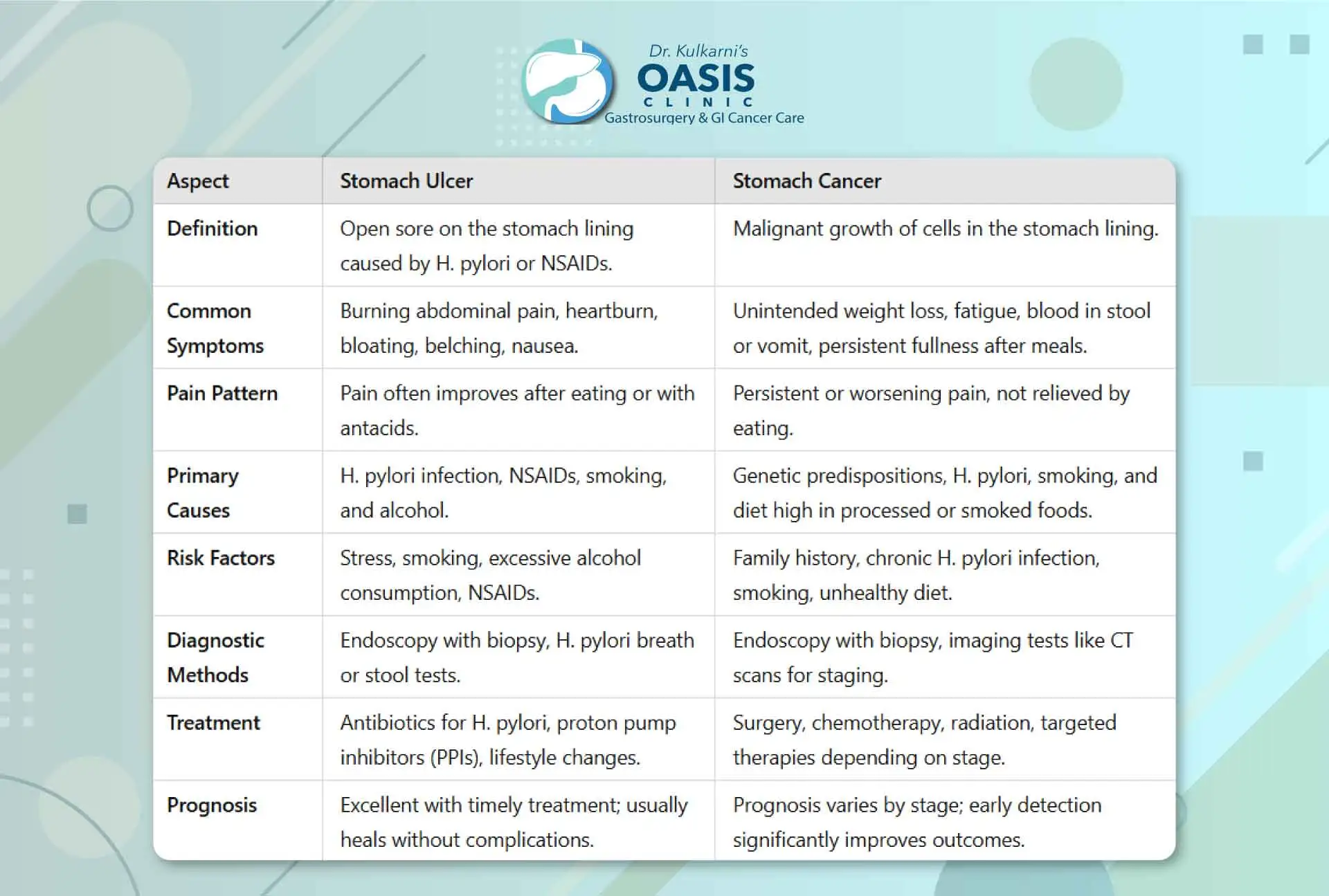
Quick Recap: Stomach Ulcer vs. Stomach Cancer
FAQs
- Can an ulcer turn into cancer?
While an ulcer itself does not become cancerous, chronic H. pylori infection can increase the risk of developing stomach cancer. - How long can ulcers last without treatment?
Ulcers can persist for weeks or months without treatment, potentially leading to complications. - What are the early warning signs of stomach cancer?
Early signs include unexplained weight loss, persistent fatigue, and changes in appetite. - How serious is untreated ulcer vs. undiagnosed stomach cancer?
Untreated ulcers can lead to bleeding and perforation. Undiagnosed stomach cancer can progress to advanced stages, making treatment more difficult and reducing survival rates.
Conclusion
If you experience persistent or concerning symptoms, seek medical advice promptly. While symptoms of stomach ulcers and stomach cancer can overlap, healthcare professionals can accurately diagnose and treat these conditions. Early intervention is key to effective treatment and better health outcomes.
Don’t ignore persistent stomach symptoms—early diagnosis saves lives. Trust Dr. Aditya Kulkarni, the best stomach cancer doctor in Pune, for expert care and personalized treatment. Schedule your consultation today!

Dr. Aditya Kulkarni
MS, DNB, FRCS, MCh (Surgical Gastroenterology & GI Oncology)
Dr. Aditya Kulkarni is a Consultant of Laparoscopic and Robotic Gastrointestinal, Hepato-biliary-pancreatic, and Cancer Surgeon at the Renowned Oasis Surgery Clinic Pune.
Book An Appointment